Overview
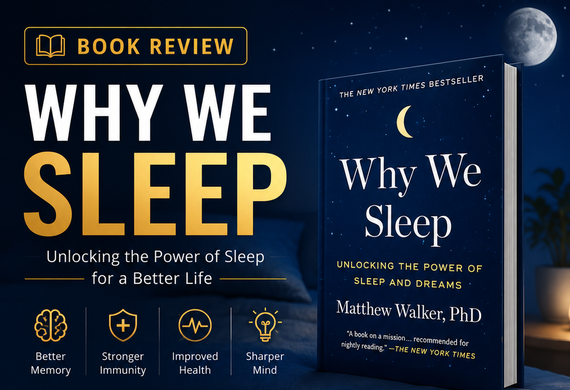
Why We Sleep is a fascinating and authoritative exploration of one of the most vital yet underappreciated aspects of human life: sleep. As a neuroscientist and leading sleep expert, Matthew Walker combines rigorous scientific research with accessible storytelling to fundamentally reshape how we view sleep.
This is not just another health book from Matthew Walker. It is a compelling, evidence-based argument that sleep is not a luxury, but a biological necessity — arguably the most important pillar of health.
A Personal Reflection
For years, I bought into the productivity mindset that less sleep equals more success. Like many people in high-performance environments, I actively tried to train myself to function on 5–6 hours of sleep per night.
If I’m honest, during that period I was often:
- Low energy
- Irritable
- Less patient
- Slightly miserable more often than I realised
The problem is — you don’t always recognise it at the time. That state quietly becomes your baseline.
Reading this book was a turning point. It made me realise how flawed — and frankly, how harmful — that mindset is. What I had normalised as ‘just being busy’ was, in reality, chronic sleep deprivation affecting my mood, performance, and overall wellbeing.
Key Insights
Walker presents a powerful central message: sleep underpins every aspect of our physical and mental wellbeing.
“A balanced diet and exercise are of vital importance, yes. But we now see sleep as the preeminent force in this health trinity. The physical and mental impairments caused by one night of bad sleep dwarf those caused by an equivalent absence of food or exercise.”
He goes further to suggest that sleep is not just one component of health — but its very foundation:
“Sleep is more than a pillar; it is the foundation on which the other two health bastions sit.”
The Science of Sleep
Walker explains sleep in a clear and structured way, focusing on two key stages:
- Non-REM (NREM) sleep — physical restoration and memory consolidation
- REM sleep — dreaming, emotional processing, and creativity
He also highlights the evolutionary importance of sleep:
“Without exception, every animal species studied to date sleeps… Sleep is universal.”
The Dangers of Sleep Deprivation
One of the most striking aspects of the book is the sheer scale of harm caused by insufficient sleep.
“The consequences of chronically depriving ourselves of the sleep we need… are astonishingly devastating.”
Walker links poor sleep to:
- Cardiovascular disease
- Diabetes and obesity
- Cancer risk
- Cognitive decline
- Mental health disorders
Perhaps most critically:
“You do not know how sleep-deprived you are when you are sleep-deprived.”
Sleep as the Ultimate Medicine
One of the most memorable ideas in the book is the framing of sleep as a powerful, free intervention:
“Scientists have discovered a revolutionary new treatment that makes you live longer… It protects you from cancer and dementia… You’ll even feel happier, less depressed, and less anxious.”
The ‘treatment’, of course, is simply a full night of sleep.
Sleeping Tablets vs Natural Sleep
An important and often overlooked point Walker makes concerns sleeping tablets. He explains that most sleep medications do not replicate natural sleep architecture, and instead induce a form of sedation rather than true restorative sleep.
As a result, they may not provide the same cognitive, emotional, and physiological benefits as natural sleep. Instead, there is strong evidence supporting Cognitive Behavioural Therapy for Insomnia (CBT-I) as a more effective and sustainable treatment — addressing underlying behaviours and thought patterns rather than masking the problem.
Modern Life and Sleep Disruption
Walker highlights how modern life actively works against good sleep:
- Blue light from screens
- Irregular schedules
- Caffeine and alcohol
“Using an iPad… prior to bed blocked the otherwise rising levels of melatonin…”
Even small disruptions — like losing a single hour of sleep — can have measurable health consequences.
Practical Takeaways
The advice is simple but powerful:
- Maintain a consistent sleep schedule
- Avoid screens before bed
- Limit caffeine and alcohol
- Exercise regularly (but not too late)
“Stick to a sleep schedule. Go to bed and wake up at the same time each day.”
Strengths & Critique
Strengths:
- Evidence-based and highly informative
- Engaging and easy to understand
- Clinically relevant
- Genuinely behaviour-changing
Critique:
- At times slightly alarmist
- Some conclusions feel strongly stated
Final Verdict
Why We Sleep is a powerful and eye-opening book that challenges one of the most common modern myths — that we can sacrifice sleep without consequences.
For me personally, it completely shifted my perspective. What I once saw as discipline — functioning on minimal sleep — I now recognise as a major compromise to my health and performance.
Sleep is not a luxury — it is a necessity.
And ignoring it may be one of the most damaging decisions we make for our long-term health.
